Lifting Where People Can’t: Elebia at CERN
22 October, 2026 - Editorial Team
Why Limited Exposure Time Makes Remote Lifting a Necessity
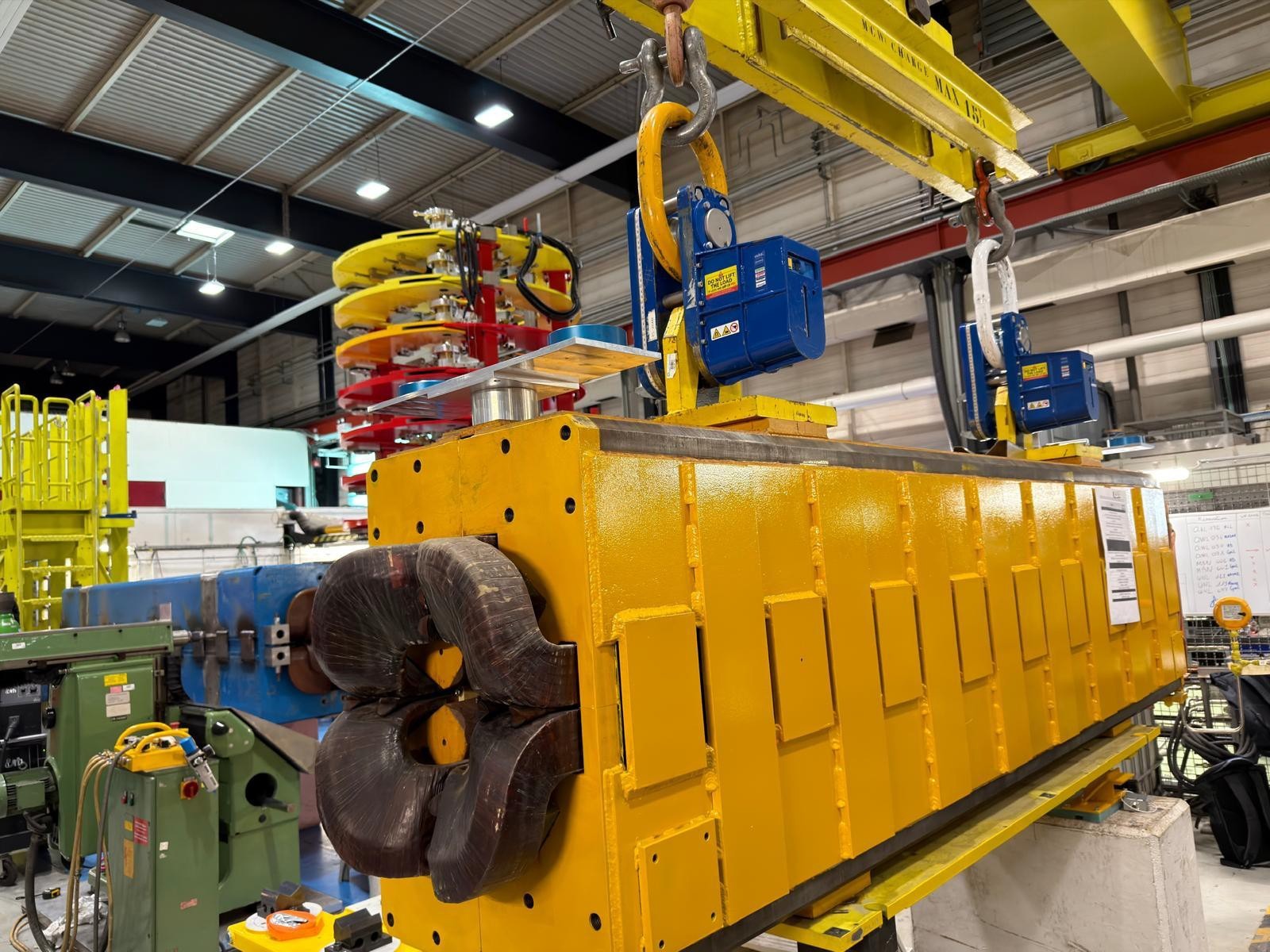
Some environments simply weren’t built for long human presence. At CERN, certain operations require keeping exposure time to an absolute minimum, a constraint that changes everything about how lifting work gets planned and executed. In settings like this, remote and automatic lifting solutions stop being a convenience and become a real necessity.
Adapting the System to CERN’s Lifting Points
It’s precisely this kind of challenge that brought our team to CERN for a live, on-site demonstration of our automatic hooking system. Rather than adapting a generic setup, we worked side by side with CERN‘s own engineering team from the start, reviewing their specific lifting points, understanding the operational constraints they were working under, and adjusting our system accordingly.
That collaborative approach is what made the demonstration possible. It wasn’t a matter of showing up with a fixed product and hoping it would fit; it meant listening first, adjusting our equipment to a highly specific and demanding use case, and testing everything under real operating conditions, together with the people who understand that environment best.
Engineering That Goes Beyond Lifting a Load
This is the kind of demonstration that reflects what we care about most at Elebia: engineering that goes beyond simply lifting a load. When exposure time is limited and precision leaves no margin for error, remote lifting isn’t an upgrade to how things are normally done: it’s what makes the work possible at all.
We’re proud to have had the opportunity to demonstrate our system at CERN, and even prouder of the collaborative process that got us here.
 (+34) 93 543 4706
 info@elebia.com


